
Singapore’s Must-Visit Museums

Singapore’s Must-Visit Museums

As you step off the plane and breathe in the vibrant air of Singapore, the city’s rich culture and history instantly draw you. Lucky for you, there’s no better place to dive into that history than at the city’s many museums. From ancient artifacts to modern art, each museum has its own story and its treasures to uncover. So, grab your map and join us on a journey through the famous museums in Singapore as we discover the hidden gems and must-see exhibits that await you.

Top Museums to Visit:

1. National Gallery Singapore

The National Gallery Singapore houses over 8,000 modern Southeast Asian artworks and specializes in featuring the works of pioneering Singaporean artists who were forerunners of the Nanyang art style. The museum is located in two historic buildings, the former City Hall and Supreme Court, which are architectural masterpieces. Since opening in 2015, the National Gallery Singapore has become Singapore’s largest visual arts venue, displaying modern art from Singapore, Southeast Asia, and beyond. 

Nearest MRT: City Hall and Clarke Quay

Highlights and must-see artifacts: Some of the highlights include the Southeast Asian Gallery, which features the largest public display of Singaporean art, and the UOB Southeast Asia Gallery, which showcases the artistic traditions of Southeast Asia.

Facilities: It provides various facilities for visitors, including free Wi-Fi, lockers, a gift shop, and cafes and restaurants serving local and international cuisine.


Click here to know more.

Insider Tip: If you’re looking for a sweet escape in Singapore, visit the Museum of Ice Cream! Don’t miss the chance to snap a photo at the famous Pink and Yellow Jungle and try the unique local flavors like Bandung and Mango Sticky Rice.  Also, arrive early in the morning or later in the evening to avoid crowds and long lines. This will give you more time to explore the interactive exhibits and enjoy the ice cream treats without feeling rushed.

2. National Museum of Singapore
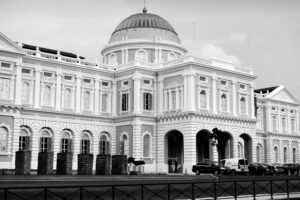
The National Museum of Singapore, opened in 1887 as the Raffles Library and Museum, is the city’s oldest museum with over a century of history. Its grand Neo-Palladian architecture houses modern galleries featuring interactive exhibitions that record Singapore’s development. The Singapore History Gallery is a popular attraction that provides visitors with a fun and engaging introduction to the city-state’s history, dating back to the 13th century.

Nearest MRT: Bras Basah

Highlights and Must-see Artifacts: Some must-see exhibits include the Singapore History Gallery, the Goh Seng Choo Gallery, the Living Galleries, and the Glass Rotunda. Visitors should also check out the museum’s special exhibitions and events.

Facilities: The museum has a shop, a cafe, and a restaurant. 

Click here to know more.

Insider Tip: Consider purchasing a Singapore Tourist Pass, which offers discounted admission to several museums and attractions in the city, as well as other perks like free public transportation and discounts on dining.

3. Science Center Singapore

The Science Centre Singapore is a well-known scientific establishment committed to promoting the public’s scientific and technological understanding. With over 1,000 interactive exhibits across 14 galleries, it is an ideal destination for families and school groups seeking fun and educational experiences. The Centre also features Singapore’s only domed IMAX theatre, the Omni-Theatre, and Snow City, which offers a chilly escape from the tropical heat.

Nearest MRT: Jurong East

Highlights and Must-See Artifacts: Some highlights include the Kinetic Garden, the Human Body Experience, and the Space Science exhibit. Other must-see artifacts include the Butterfly Aviary, a tropical garden that houses over 500 butterflies from around the world.

Facilities: It offers dining options, a gift shop, and free Wi-Fi throughout the center. 

Click here to know more.

Insider Tip: Stay hydrated! Singapore can be hot and humid, so bring your refillable water bottle during your museum visit. Wear comfortable clothing and shoes to make your museum visit more enjoyable.

4. ArtScience Museum
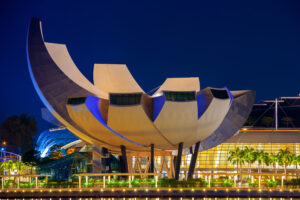
The ArtScience Museum overlooks Marina Bay and is next to the Helix Bridge. Its distinctive half-unfurled lotus flower shape reflects its mission to explore the intersection of technology and culture. The museum collaborates with various partners, such as Dreamworks Animation and the Smithsonian Institute, to showcase internationally acclaimed exhibitions. 

Nearest MRT: Marina Bay Sands

Highlights and Must-See Artifacts: Its permanent exhibit, FutureWorld: The Intersection of Art and Science, is an interactive multimedia experience created by a Japanese team lab and popular with the Instagram generation. The other is the Art of the Brick, which showcases artworks made entirely of LEGO bricks.

Facilities: It has a gift shop, a cafe, and a cloakroom where visitors can store their belongings. There are also restrooms, drinking fountains, and wheelchair-accessible facilities.

Visit their website to discover their exhibitions, tours, events, and workshops.

Click here to know more.

Insider Tip: As a general guideline, most museums allow non-flash photography for personal, non-commercial use. However, some may restrict photography, especially flash photography or tripod use. Hence, before taking photos, check the museum’s photography policy or ask the staff to avoid any issues. 

5. Singapore Art Museum

The Singapore Art Museum showcases a rotating collection of contemporary artwork from Southeast Asian and local artists. The museum’s adjacent renovated building, 8Q at SAM on Queen Street, offers modern amenities for film screenings. Established in 1996, the museum features a permanent collection of over 9,000 artworks, including sculptures, paintings, and installations. 

Nearest MRT: Bras Basah and Dhoby Ghaut

Highlights and Must-See Artifacts: Some highlights include the 5 Stars exhibition, which showcases contemporary art from Southeast Asia, and the Singapore Biennale, which is held every two years and features contemporary art from around the world.

Facilities: It has a gift shop, a café, and free Wi-Fi access. The museum also offers guided tours, workshops, and educational programs for both adults and children. Visitors can also download the SAM app, which provides information about the museum’s exhibitions and artworks.

To know more about their opening hours, exhibitions, tours, events, and workshops, visit their website

To book your tickets, click here

Insider Tip: Most museums are wheelchair accessible and offer strollers for loan. They offer accommodations for visitors with special needs, audio tours, and tactile exhibits for visual impairments visitors.

Other Museums to Visit:
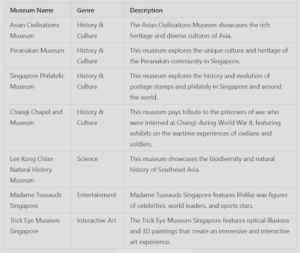
In conclusion, Singapore’s museums offer a unique window into the country’s rich history and diverse culture. Regardless of whether you’re interested in art, history, nature, or culture, there is a museum in Singapore that is sure to capture your attention. We hope this guide has helped you plan your next museum visit to Singapore!


FAQS

Some of the most famous museums in Singapore include the National Museum of Singapore, the ArtScience Museum, the Singapore Art Museum, and the Peranakan Museum.
Several different types of museums exist in Singapore, including art museums, history museums, science museums, natural history museums, and cultural museums.
The different types of museums in Singapore include art museums, history museums, science museums, natural history museums, and cultural museums. There are also several specialized museums, such as the Philatelic Museum and the Mint Museum of Toys.
Museums in Singapore have evolved over the years to become more interactive and engaging for visitors. They have also become more technologically advanced, with the use of digital media and interactive exhibits becoming more common.
The purpose of art museums in Singapore is to promote the appreciation and understanding of art. They often showcase the work of local and international artists and provide a space for art enthusiasts to explore different styles and techniques.
History museums in Singapore often feature exhibits related to the country's history and culture. This can include artifacts, documents, and multimedia displays that showcase significant events and personalities from Singapore's past.
Science museums in Singapore play an important role in promoting scientific literacy and education. They often feature interactive exhibits that allow visitors to explore scientific concepts and principles in a fun and engaging way.
Natural history museums in Singapore focus on the study and exhibition of natural specimens, including plants, animals, and fossils. They often have collections of specimens from around the world and are dedicated to promoting the understanding and conservation of biodiversity.
Some of the challenges facing museums in Singapore include attracting and retaining visitors, funding and resource constraints, and the need to keep up with technological advancements and changing visitor expectations.
Technology and digital media play a critical role in modern museums in Singapore. They can be used to enhance exhibits and provide visitors with a more immersive and interactive experience. This can include using virtual and augmented reality, multimedia displays, and interactive exhibits.
Some of the most unique museums in Singapore include the Lee Kong Chian Natural History Museum, the Haw Par Villa, the Red Dot Design Museum, and the Trick Eye Museum.
Community museums in Singapore play a crucial role in preserving and promoting the cultural heritage of specific communities. They often showcase these communities’ history, customs, and traditions and provide a space for community members to share their stories and experiences.
Museums in Singapore contribute to education and public outreach by providing opportunities for visitors to learn about a wide range of topics, including art, history, science, and culture. They often offer educational programs, workshops, and guided tours to help visitors deepen their understanding of the exhibits and topics presented.
Children's museums in Singapore are designed specifically for young visitors and often feature interactive exhibits and hands-on activities that encourage learning through play. They focus on providing a fun and engaging educational experience for children and their families.
Some of the most popular exhibits in art museums in Singapore include contemporary art exhibitions, local art showcases, and traveling exhibitions featuring works by international artists.
Heritage museums in Singapore play a crucial role in preserving and promoting the country's cultural heritage. They often feature exhibits related to Singapore's diverse ethnic and cultural groups and showcase these communities’ traditions, customs, and history.
Military museums in Singapore tell the story of the country's history through exhibits related to Singapore's military history, including artifacts, documents, and multimedia displays. They often showcase the contributions of Singapore's military to the country's development and highlight vital events and milestones in its history.
The purpose of cultural museums in Singapore is to promote understanding and appreciation of the country's diverse cultures and traditions. They often feature exhibits related to Singapore's multicultural society and showcase the art, music, dance, and cuisine of different ethnic groups.
Museums in Singapore showcase the country's diversity by featuring exhibits related to the different ethnic groups and cultures that make up Singapore's multicultural society. They often include artifacts, documents, and multimedia displays highlighting these communities' traditions, customs, and history.
Some of Singapore’s most popular interactive exhibits in science museums include hands-on experiments relating to physics, chemistry, and biology, with exhibitions related to robotics, space exploration, and renewable energy. They often feature interactive displays that allow visitors to explore scientific concepts and principles in a fun and engaging way.
Technology museums in Singapore are significant in showcasing the country's technological advancements and innovations. They often feature exhibits related to robotics, artificial intelligence, and other emerging technologies, highlighting the country's efforts to become a leader in these fields.
Museums in Singapore use various techniques to preserve and display historical artifacts, including climate-controlled environments, specialized lighting, and protective cases. They often employ conservation experts to ensure the utmost care of artifacts maintained over time.
Virtual museums in Singapore provide access to museum exhibits and collections to a broader audience, regardless of physical location or mobility constraints. They often feature virtual tours, interactive exhibitions, and online resources allowing visitors to explore and learn about them from their homes comfortably.
Some of Singapore’s most popular exhibits in natural history museums include displays related to the country's unique biodiversity, including exhibitions featuring plants and animals found only in Singapore and the surrounding region. They often feature interactive exhibits and educational resources related to ecology and conservation.
Museums in Singapore promote sustainability and environmental awareness by featuring exhibits and educational programs related to climate change, renewable energy, and sustainable living practices. They often collaborate with environmental organizations and experts to provide visitors with up-to-date information on environmental issues and solutions.
Design museums in Singapore are significant in promoting the country's creative and innovative industries. They often feature exhibits related to architecture, fashion, graphic design, and other areas of design, showcasing the work of local and international designers and highlighting Singapore's contributions to the global design community.
Museums in Singapore collaborate with other cultural institutions worldwide through exhibitions, cultural exchanges, and research partnerships. They often host traveling exhibitions featuring works by international artists and collaborate with museums and cultural institutions in other countries to promote cross-cultural understanding and exchange.
Art installations in contemporary art museums in Singapore play an important role in challenging visitors' perceptions of art and encouraging them to engage with the exhibits in new and different ways. They often feature immersive and interactive installations that invite visitors to participate in the artwork and become part of the creative process.
Museums in Singapore engage with the local community through outreach programs, community events, and educational initiatives. They often collaborate with local schools, community organizations, and cultural institutions to provide educational resources and opportunities to a wider audience.
The future of museums in Singapore will likely include continued expansion and innovation, focusing on using technology and digital media to enhance the visitor experience and provide access to museum exhibits and collections to a broader audience. They may also continue to play a critical role in promoting cross-cultural understanding and collaboration on a global scale.

Lorem ipsum dolor sit amet, consectetur adipiscing elit. Ut elit tellus, luctus nec ullamcorper mattis, pulvinar dapibus leo.

Share :

Comments

Scroll to Top