
Welcome to Singapore, where the concrete jungle meets the lush greenery of nature. Did you know that despite being a bustling city-state, Singapore is home to over 300 parks and four nature reserves? That’s right, we are a true oasis in the heart of Southeast Asia. But it’s not just the lush greenery that makes our nature trails so enchanting. It’s the wildlife that calls it home. From the majestic hornbills to the playful otters, Singapore’s nature trails are teeming with life. And with over 350 species of birds and 2,000 species of plants, there’s always something new to explore. So put on your walking shoes and get ready to discover the best nature trails in Singapore.
Trails to visit in Singapore
1. MacRitchie Reservoir
Consider checking out this trail, usually classified as moderately challenging and typically takes around 3 hours and 31 minutes to finish. It’s a well-liked spot for hiking, running, and walking, so you’ll likely see other individuals as you explore. The trail is accessible all year and stunning to visit at any time.
Difficulty level: Moderate
Notable highlights: HSBC TreeTop Walk, Jelutong Tower, and Lornie Trail
Click here to discover more about MacRitchie Reservoir.
➕Insider tip: Consider renting a kayak. MacRitchie Reservoir offers kayak rentals, a great way to explore the reservoir from a different perspective.
2. Bukit Timah Nature Reserve

This is a top destination for nature lovers due to its abundant biodiversity, lush forests, and diverse ecosystems. It boasts Singapore’s tallest hill, surrounded by one of the few remaining rainforests in the country, making it an ideal place for nature viewing and botanical collections. Visitors can go hiking or biking or opt for guided or self-guided nature walks to see the flora and fauna that call this park home, including the Greater Racket-tailed Drongo, Malayan Colug, and Red Dhup.
Along this trail, you can also explore the Rail Corridor and Hindhede Nature Park.
Difficulty level: Difficult
Notable highlights: Bukit Timah Summit, Hindhede Nature Park, and Dairy Farm Nature Park
Click here to learn more about Bukit Timah Nature Reserve.
➕Insider tip: Watch out for monkeys! The park is home to a large population of long-tailed macaques, which can be quite bold and aggressive if they feel threatened or see you carrying food. Keep a safe distance from the monkeys, and don’t feed them.
3. Chestnut Nature Park
Covering 81 hectares, Chestnut Nature Park is Singapore’s largest nature park, divided into North and South regions. The park offers distinct trails for mountain biking and hiking. The former includes a pump track for bikers to practice their skills, and the latter features varied terrains and steps, particularly on the 2.1km Southern Loop. Visitors can also enjoy birdwatching and view habitat enhancements done by NPark, which have helped native tree species, such as the Singapore Walking-Stick Palm and Jelutong, thrive and support local wildlife.
Difficulty level: Easy to moderate
Notable highlights: Two nature trails, mountain bike trails, and a canopy walk
Click here to get more information on Chestnut Nature Park.
➕Insider tip: If you’re up for a challenge, try the 5.6km Northern Loop, which is more strenuous than the Southern Loop and offers some stunning views of the surrounding forests.
4. Sungei Buloh Wetland Reserve

Sungei Buloh Wetland Reserve, Singapore’s first ASEAN Heritage Park, is a lush wetland and mangrove forest filled with various bird species. Migratory birds such as sandpipers and plovers can be spotted from September to March, while herons and sunbirds reside there year-round. Visitors can explore the hiking trails and mudflats and participate in guided or self-guided nature walks to discover the parks’ flora and fauna. Weekly volunteer-led tours showcase the indigenous species found in this mangrove forest.
Difficulty level: Easy
Notable features: Mangrove boardwalks, migratory birds, and mudskippers
Click here to explore Sungei Buloh Wetland Reserve.
➕Insider tip: Plan your visit during low tide, when the mudflats and mangrove mudskippers become accessible to visitors. Check the tide timings before you visit.
5. Southern Ridges
The moderately challenging route is known for hiking, running, and walking. Beginning at HarbourFront MRT station, it spans three to five hours, encompassing Mount Faber Park, Telok Blangah Hill, and HortPark, and concluding at Kent Ridge Park, where you’ll probably come across other explorers.
Along this trail, you can also explore the Labrador Nature Reserve.
Difficulty level: Easy to moderate
Notable highlights: Henderson Waves, Forest Walk, and Canopy Walk
Click here to discover more about Southern Ridges.
➕Insider tip: Visit during the evening. The Southern Ridges trail is just as beautiful at night as it is during the day. Take a stroll along the Henderson Waves Bridge, which is beautifully lit up in the evenings.
Tips for Hiking in Singapore
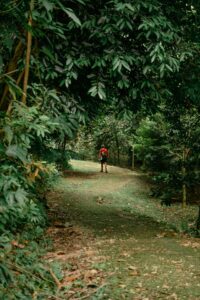
Hiking is a great way to enjoy Singapore’s natural beauty and get some exercise. However, hiking in Singapore can be challenging due to the hot and humid weather, steep terrain, and dense vegetation. Here are some tips to help you make the most of your hiking experience in Singapore:
- Dress appropriately: When planning a hike, check the weather and avoid rain and thunderstorms. Wear lightweight and breathable clothing, comfortable hiking shoes with good traction, and protect yourself from the sun with sunscreen, a hat or visor, and long-sleeved clothes.
- Stay hydrated: Drink plenty of water to prevent dehydration. Bring a reusable water bottle and refill it at the water stations available at the parks. Avoid drinking from natural water sources as they may be contaminated.
- Know your limits: Start with easier trails and gradually work your way up to more challenging ones. Take breaks when needed and listen to your body. If you feel tired or unwell, turn back and seek medical attention if necessary.
- Carry a first aid kit: Bring a basic first-aid kit with essentials, such as bandages, antiseptic wipes, and insect bite cream.
- Hike with a buddy: It’s always a good idea to hike with a friend or in a group. If you’re hiking alone, let someone know your route and expected return time.
- Stay on designated trails: Stick to designated trails and avoid off-trail hiking, which will help you avoid getting lost and prevent damage to the ecosystem.
- Leave no trace: Pack out what you pack in, and dispose of your trash properly. Do not disturb wildlife or plants.
In summary, nature trails in Singapore offer a unique and refreshing experience for visitors, promoting an appreciation for the city’s rich biodiversity while providing a much-needed escape from the hustle and bustle of the city. So whether you’re a nature lover or just looking for a relaxing day out, be sure to explore these stunning trails and immerse yourself in Singapore’s natural beauty.
