
Welcome to Singapore’s vibrant Chinatown, a cultural hub bursting with energy, history, and excitement that is both a bustling commercial district and a fascinating cultural enclave. With its colorful shophouses, lively markets, and mouth-watering food, Chinatown is a must-visit destination for any traveller seeking to experience the rich tapestry of Singaporean culture.
Getting to Chinatown: A Journey Worth Taking
Chinatown is easily accessible by public transportation. The main entrance to Chinatown is Pagoda Street, a pedestrian-only street that runs through the heart of Chinatown.
- MRT: The Chinatown MRT station is located on the North-East Line and the Downtown Line, providing easy access to the neighborhood. Once you arrive at the station, take Exit A and follow the signs to the main entrance of Chinatown.
- Bus: Several bus routes run through Chinatown. Get off at either the Chinatown Point or the People’s Park Complex bus stop. You can check the bus route and timings on the TransitLink website.
- Taxi/Car: Taxis are readily available throughout Singapore. If you prefer to take Grab to Chinatown, download the Grab app and book a ride to the main entrance of Chinatown on Pagoda Street.
- Walking: Chinatown is a relatively small neighborhood and explorable on foot.
Insider Tip: If you’re coming from the airport, consider taking the MRT instead of a taxi to save money and avoid traffic.
Rest and Recharge: Accommodations in Chinatown

Chinatown Singapore offers visitors varied accommodation options, from budget-friendly hostels to luxury hotels. Here are some popular choices:
This modern and affordable hostel offers unique capsule-style accommodations for budget-conscious travelers. It also has a rooftop terrace and a shared lounge area for guests to relax and socialize.
This chic boutique hotel is a mid-range option located in Chinatown. The hotel features beautifully designed rooms with modern amenities, including a flat-screen TV and free Wi-Fi.
This luxury hotel is perfect for travelers who want comfort and convenience. It provides roomy accommodations and suites featuring contemporary décor and high-tech facilities, such as an outdoor pool, gym, and restaurant offering regional and global cuisines.
Chinatown’s Must-See Gems: Top Attractions

Chinatown in Singapore is a bustling and vibrant neighbourhood filled with rich cultural heritage and exciting attractions. The following are some of the must-see sights that tourists should include in their itinerary:
- Buddha Tooth Relic Temple and Museum: This stunning temple is dedicated to the Buddha and is home to a tooth relic that is said to have belonged to him. The temple also has a museum that showcases Buddhist artefacts from all over Asia.
- Sri Mariamman Temple: This is the oldest Hindu temple in Singapore and is known for its intricate architecture and colorful decorations. It is dedicated to the goddess Mariamman, who is worshipped for her ability to cure diseases.
- Maxwell Food Centre: No trip to Chinatown would be complete without sampling some of the amazing food! Maxwell Food Centre is a hawker centre that has a wide variety of stalls selling everything from traditional Chinese dishes to modern fusion cuisine.
- Thian Hock Keng Temple: This is one of Singapore’s oldest and most important Hokkien temples. It is dedicated to the goddess Mazu, who is worshipped by sailors for her ability to protect them at sea.
- Ann Siang Hill Park: This park is a great place to escape the hustle and bustle of Chinatown. It is located on a hill and has beautiful views of the city. Several restaurants and cafes nearby make it an incredible spot for a relaxing afternoon.
Insider Tip: Don’t be afraid to explore Chinatown Street Markets, as you never know what hidden gems you might find.
Savoring the Flavors: Eating and Drinking in Chinatown

The famous foodie destinations in Singapore are Chinatown, specifically the Maxwell Hawker Centre and Chinatown Food Street (Smith Street). The former is a bustling and vibrant center famous for its local dishes, including the iconic Tian Tian Hainanese chicken rice and Zhen Zhu Fang handmade noodles. Meanwhile, the latter is a pedestrian street with food stalls offering a diverse range of street food, snacks, and drinks, such as ice kacang and durian puffs, fried carrot cake, oyster omelets, sugarcane juice, and beer.
Experience the diverse culinary offerings of Chinatown-the rich and flavorful Bak Kut Teh at Song Fa; modern takes on classic dim sum at Dim Sum Haus; the popular breakfast combination of Kaya Toast and Kopi at Ya Kun Kaya Toast; and sweet and refreshing bubble tea at LiHO Tea and Koi Thé.
Insider Tip: Don’t be afraid to ask for recommendations from locals or stall owners, as they often have insider tips on the amazing dishes.
Treasure Hunt: Markets and Shops in Chinatown
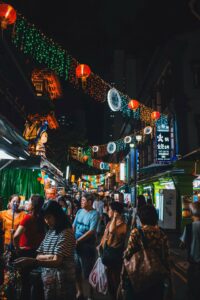
- Souvenir shops: Chinatown’s souvenir shops offer a wide range of traditional Chinese handicrafts, trinkets, and gifts, including calligraphy scrolls, tea sets, zodiac figurines, silk scarves, chopsticks, and decorative fans. These shops are great for finding unique gifts and souvenirs to take home.
- Wet markets: Chinatown has several wet markets, including the Chinatown Complex Market and the People’s Park Complex Food Centre, which sell fresh produce, seafood, meat, and other food items. These markets are great places to experience the local food culture and find fresh ingredients.
- Fashion boutiques: In addition to traditional shops, Chinatown also has several fashion boutiques that sell trendy clothes, accessories, and jewelry. These boutiques are great places to find unique and fashionable items at reasonable prices.
Insider Tip: Bargaining is common at the street markets, so don’t be afraid to negotiate for a better price.
Chinatown After Dark: Nightlife Hotspots

Chinatown comes alive at night, with a variety of bars, clubs, and live music venues that cater to a diverse crowd. Some must-visit nightlife spots in Chinatown include
- Lucha Loco: This vibrant and colorful bar is known for its Mexican-inspired cocktails and lively atmosphere. It’s a popular spot for locals and tourists alike, with a large outdoor seating area and regular DJ sets.
- 28 Hong Kong Street: This award-winning bar is known for its craft cocktails and innovative drinks menu. It has a stylish and sophisticated atmosphere, focusing on quality ingredients and attentive service.
Festive Fun: Events and Festivals in Chinatown
Some of the most exciting events and festivals happening in Chinatown are:
- Chinese New Year: A grand celebration of family, food, and performances in Chinatown, featuring lion and dragon dances, acrobatics, and street bazaars.
- Mid-Autumn Festival: Witness colorful lantern displays, street performances, and sample mooncakes in Chinatown during this festive time.
- Singapore Heritage Festival: An annual event celebrating the cultural heritage of Chinatown and Singapore, featuring guided tours, performances, food tastings, and exhibitions.
Chinatown Singapore offers a glimpse into the city’s rich cultural heritage, vibrant nightlife, and unique shopping scene with its colorful shophouses, bustling markets, and delicious food. Don’t miss out on this diverse neighborhood – plan your trip today!
